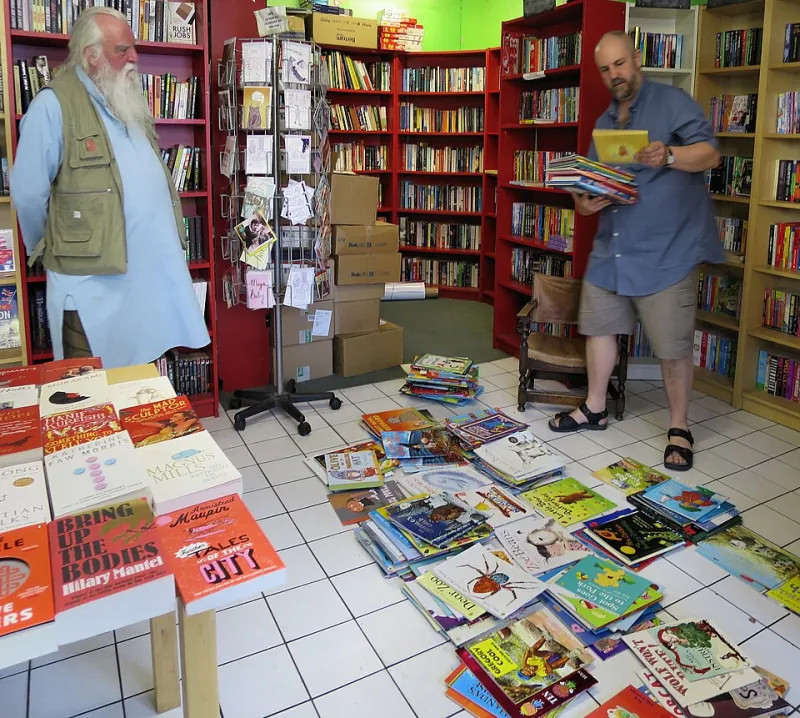
What's a Signature Actually Worth? Buying First Editions on the Festival Circuit Without Getting Burned
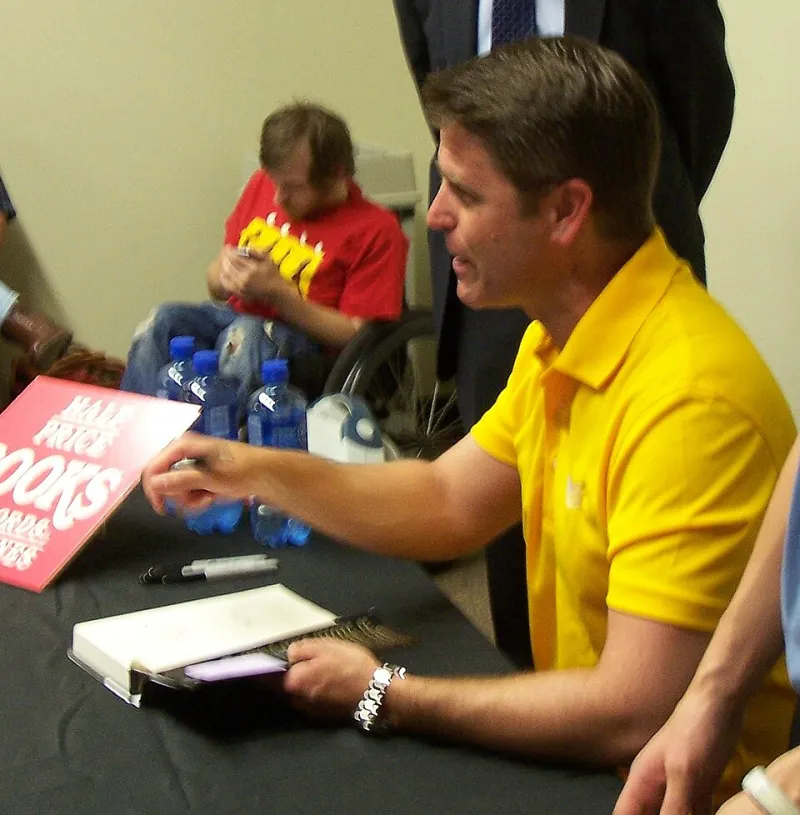
Photo: Benjamin White https://www.flickr.com/photos/bjwhite66212/, CC BY-SA 2.0, via Wikimedia Commons
Every festival has the same tableau: a table at the back of the tent, a stack of hardbacks, an author with a pen and a slightly fixed smile, and a queue of people holding books at the exact angle they've seen in photographs. Somewhere in that queue is a reader who has brought a first edition from home, wrapped in a cloth bag, and is about to discover that the thing they thought would make it valuable is only half the story.
This is, I'll admit, an opinion piece. But it's an opinion grounded in a lot of conversations with the people behind those tables — the booksellers who cart the stock, price the stock, and quietly wince at what happens to it next.
The signature is not the main event
A common misconception, and one that booksellers hear weekly: that a signed book is automatically worth more. It isn't. A signature on a book that isn't a first printing is a nice souvenir and very little else.
"The edition does the heavy lifting," says a second-hand dealer who works the Chilterns fair circuit. "A signed first impression of a novel that mattered? That's a real thing. A signed twelfth impression of the same novel is a signed book. We'll buy it, but we'll pay for the book, not the pen."
Where a signature does add value, the percentage is far less dramatic than people imagine — often somewhere in the region of ten to forty per cent for mid-list literary fiction, more for genuinely scarce titles, and effectively nothing where the author has signed several thousand copies in a warehouse and the publisher has printed it on the jacket. Dedications complicate things further. "To Margaret, who I met at the till" is charming in a house and a drag on a resale.
So: buy signed books because you want them. If you're buying them as an investment, you're in the wrong queue.
Checking for a true first printing
This is the part worth learning before you get to the till. The rules vary by publisher, which is annoying, but the basics hold.
- The number line. On the copyright page, a descending sequence — 10 9 8 7 6 5 4 3 2 1 — usually indicates a first impression. A sequence with the 1 missing (10 9 8 7 6 5 4 3 2) is a second printing. Some publishers use an ascending odd-numbers line instead; both formats are normal.
- The date. Look for "First published in 2026 by…" and no mention of reprinting. A line reading "This edition published 2026" alongside "First published 2019" means it isn't the first edition of anything.
- The publisher's name on the spine. If the spine says one imprint and the title page says another, you may be looking at a book club or bargain edition wearing a smarter jacket.
- The jacket price. A printed price on the front flap is a decent sign of a trade edition; a blank flap often isn't.
- The format. Hardback first, paperback later is the usual order — but plenty of literary debuts arrive as "export trade paperbacks" first, and those are the true first editions. Confusing, and worth asking about.
- The signed-edition sticker. Publishers do issue genuine pre-signed runs with a printed sticker. But stickers also get added by optimistic sellers, and peeling one off can leave a mark. If the sticker is doing the work, be suspicious.
The festival habits that quietly ruin a book
Here's where the well-meaning collector does the most damage, and almost all of it happens in the ninety minutes after the signing.
The tote bag. A hardback corner in a canvas bag with a water bottle and a programme is a dinged corner waiting to happen. Bring something rigid, or buy a bag from the bookseller with a flat base.
The drinks tent. A single ring on a dust jacket is permanent. Nobody has ever successfully removed one.
The sun. Festival fields are merciless. A spine left facing a window for a fortnight will fade, and faded jackets halve a book's appeal to a dealer faster than almost anything else.
The lanyard. Clipping a festival pass to the front board leaves an indentation that never comes out. Ask me how I know.
The queue read. Reading your new purchase while you wait for the next event creases the spine and dulls the corners. Read a phone, a freebie, anything else.
The jacketless carry. Removing the dust jacket while you queue is sensible. Losing it under a folding chair is not. The jacket is anywhere between half and most of the book's collectable value.
The biro. Authors sign with what they're given. If you have a strong preference, bring a fine-nibbed pen — most will happily use it. Felt tip bleeds through a title page on cheap paper.
Three questions worth asking the bookseller
- Is this the first impression, or a later printing?
- Is the signature in the book itself, or on a tipped-in page?
- Has this been signed today, or was it a pre-signed stock copy?
All three answers should be immediate. A bookseller who hesitates is either unsure or hoping you won't push.
A short souvenir checklist
Buy the hardback if you can. Check the number line before you pay. Keep the jacket on for the photo and off for the carry. Ask for a signature on the title page, and skip the dedication unless you genuinely want one. Take a photograph of the signing — it's proof of provenance and costs nothing. And put the book somewhere flat and dry the moment you get home, not at the bottom of a bag on the last train.
The slightly awkward truth is that the best thing you can do for a book's value is also the thing that gives it value to you: read it carefully, keep it well, and remember which evening it came from. A pristine first edition with no story attached is just stock. The one with the creased ticket from a rainy Thursday in Chesham inside it is the one you'll still have in thirty years.