Frost, Firesides and First Editions: Why the Winter Festival Season Deserves Your Attention
There is a particular smell to a summer literary festival. Sun cream, damp canvas, and the faint desperation of a queue for a portaloos. It is glorious, obviously. But by the time September folds itself away, plenty of readers are quietly relieved.
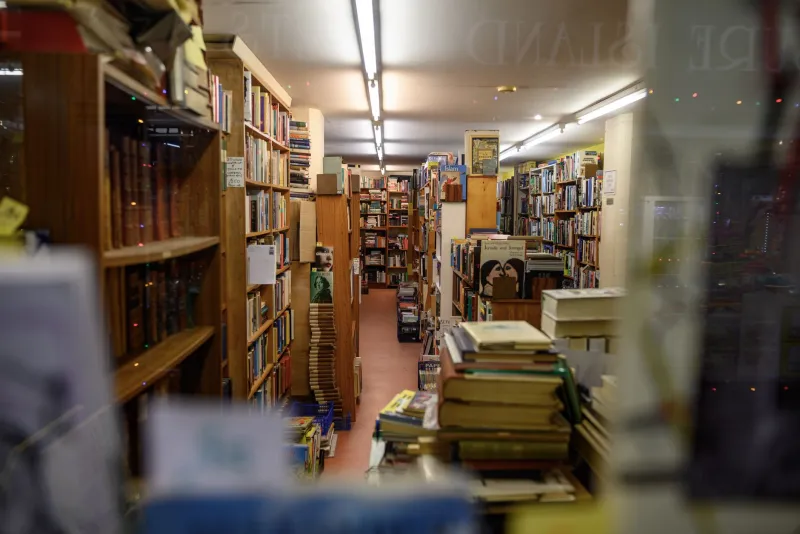
Winter festivals have none of that. Instead you get a room above a bookshop with eighteen chairs, a radiator that clanks, and an author who — because there are only eighteen of you — actually answers the question you asked.
That is the appeal of what we are calling the quiet season: the run of smaller UK literary events between late October and early March. It is not a rival to Hay or Cheltenham. It is something else entirely, and arguably better value.
Why the darker months suit readers better
Let's start with the obvious: fewer people want to leave the house. That is not a problem for festivals, it is an advantage. Smaller crowds mean shorter queues for signings, better seats, and the strange luxury of hearing a writer speak without a screen relayed from an overflow tent.
Costs drop too. Accommodation outside the summer peak is often a third cheaper in cathedral cities, and rail fares are easier to find at sensible prices when you are not competing with everyone else's August bank holiday. A winter weekend of four events plus a night away can cost less than a single day ticket to a big-name summer headliner.
The rhythm is different as well. Dark by half four means events cluster in the afternoon and early evening, which suits anyone who would rather not be driving back down a country lane at midnight. Several organisers now deliberately programme a 3pm and a 6.30pm slot, with a long gap in between that is practically designed for a bowl of soup and a browse in the partner bookshop.
Cathedral cities, market towns, and the Chilterns on your doorstep
Geographically, the winter circuit spreads across exactly the kinds of places that get overlooked in festival season.
Durham, Wells, Salisbury and Norwich all host bookish gatherings in the colder months, usually leaning on a cathedral or a medieval hall for atmosphere. Ludlow and Stamford do something similar with their town-centre venues; both are towns where the walk between events is part of the pleasure. Edinburgh's winter programming trades on long evenings and a certain smugness about how cosy it all is.
Closer to home for us, the Chilterns have a quietly thriving scene. Great Missenden's Roald Dahl connections keep the children's side busy, but Berkhamsted, Tring, Wendover and Amersham all run author conversations through the winter, most of them hosted by independent booksellers rather than by a festival office. That distinction matters: the bookshop picks the author, the bookshop has read the book, and the bookshop will happily tell you which of the other forty things on the shelf you should buy next.
The programming is genuinely different
Winter events tend to skew towards craft rather than celebrity. Expect more workshops, more poetry, more nature and place writing, more local history, and far fewer ghosted memoirs from people off the telly.
There is a practical reason. Small venues cannot absorb a big advance-sized audience, so programmers go for authors who will talk well in a room of thirty. That tends to favour mid-list novelists, short story writers, translators and non-fiction specialists — exactly the people whose books get lost in a summer brochure.
You will also see more formats that would not survive a big tent: reading groups that meet the author in advance, walks that end in a pub with a poet, and what one organiser described to us as the "slow interview" — ninety minutes, one author, no moderator waving a card at the two-thirds mark.
Practical notes if you are planning a trip
A few things worth knowing before you book.
- Book early for the small stuff. A fifty-seat venue sells out faster than a thousand-seat marquee, and the popular local authors go first.
- Check the light. Sunset in December is before four. If you are travelling any distance, aim for an afternoon event and stay over, or pick a weekend where the main draw is at 3pm.
- Avoid the Christmas-market clash. Several cathedral cities have a weekend in late November or early December where the town centre is impassable. Lovely, but not compatible with getting to a 6pm talk.
- Ask about the bookshop partner. Where an indie is involved, you can usually reserve the book with your ticket. That is often the difference between a signed first edition and a signed nothing.
- Look at accessibility properly. Older venues mean steps, narrow doors and unpredictable loos. Good festivals publish access notes; if they do not, email and ask.
For writers, it is a gentler on-ramp
If you are on the other side of the lectern, the quiet season is where you want to be making your first appearances. Panels are shorter, audiences are warmer, and programmers are more willing to take a chance on someone without a publicist because the financial risk is low.
A winter slot also gives you something a summer slot cannot: a reading list. Turn up in February and the bookseller will stock you through to the spring, hand-selling to anyone who asks for something new. That is worth more than a ten-minute set in a field.
The case for going quietly
The summer circuit will always have the glamour, the headlines and the photographs of authors squinting in the sun. But if what you actually want is to hear someone talk properly about a book you have read, in a warm room, within walking distance of a decent pub, then the winter months are quietly running away with the whole thing.
Take a scarf. Arrive early. Sit near the radiator.