Train, Bus, Borrowed Bike: A Car-Free Field Test of the Chilterns Festival Circuit
There is a particular kind of optimism that comes from opening a festival programme and seeing a venue described as 'ten minutes from the station'. Ten minutes by what? A brisk walk in dry weather? A taxi that does not exist? A local bus that last ran at 4.15pm? This autumn, with the 2026 Chilterns festival circuit in full swing, I decided to stop guessing and actually try to reach a few events without a car.
The route on paper
The plan looked sensible. Train from London Marylebone to a Chiltern Line station, a local bus into a village, a short walk to a hall, an afternoon panel, then the same route home. On paper it was a neat little diagram of sustainable festival-going: train, bus, boot. On the ground it was a reminder that the Chilterns are beautiful precisely because they are not arranged around the needs of a reader with a tote bag and a return ticket.
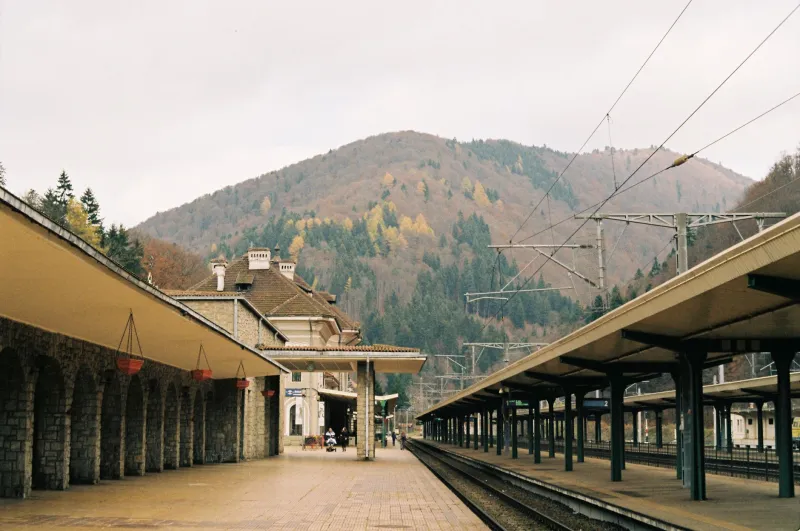
The train part was easy. Chiltern Railways and the Metropolitan line can drop you in places like Great Missenden, Amersham, Chesham, Wendover, Princes Risborough, Tring and Berkhamsted, and there is something genuinely civilised about arriving at a festival by rail. You get reading time, you avoid the queue for the car park, and you feel briefly virtuous. But stations are not venues. A station name on a festival page can hide a mile and a half of lane, a missing pavement and a hill that looks much steeper with a hardback in your bag.
What the train gets right
Let us give credit where it is due. The rail network is the strongest part of the car-free case. The Chiltern Line is charming in the way that only a railway that still feels slightly surprised to be busy can be. The Metropolitan line gets you deep into the Chilterns from central London without changing trains. For daytime events in towns with stations, car-free festival-going is not a fantasy at all. I went to one lunchtime talk, walked ten minutes from the platform, bought a book, heard a good panel and was back on a train before the rush. It was lovely. It was also the easy version of the challenge.
The bus that leaves before the applause
The trouble starts when the venue is a village hall rather than a town arts centre. Local buses in the Chilterns tend to be designed around schools, shops and commuters, not around a 7pm panel that overruns because the chair asked one more question. I found a bus that would get me to an event with forty minutes to spare, which sounds fine until you realise the return service left twelve minutes before the event was due to finish. The driver was friendly. The timetable was not.
Sunday services are thinner still, and evening buses can be close to mythical. If a festival programme says an event runs from 5pm to 6.30pm, it needs to say that a bus leaves at 5.10pm and the next one is tomorrow. Otherwise the car-free reader is left doing mental arithmetic in the aisle while the author is still signing books. Organisers are not bus companies, but they are the people who choose the venue and the finish time. That makes them part of the transport conversation whether they like it or not.
Bikes, boots and the weather clause
Cycling is the romantic option. The Chilterns have wonderful lanes and plenty of riders who make the hills look effortless. They are not effortless. A borrowed bike or a station hire scheme can work for a short, daylight event in summer, but November is a different beast: wet leaves, early dusk, narrow lanes and nowhere obvious to lock a bike at a village hall. I saw one rack outside a venue. It had room for two bicycles and was already occupied by a sign saying 'No Parking'.
Walking is the other last-mile answer, and for some venues it is genuinely viable. A footpath from the station, a pavement along the high street, a fifteen-minute stroll through a village — that is the dream. But footpaths get muddy, stiles are not luggage-friendly, and rural lanes often have no verge at all. The car-free reader needs to know whether the walk is a pleasant amble or a torch-lit negotiation with a four-by-four. That information should be on the event page, not discovered at the station taxi rank that isn't there.
The last mile is a design problem
What I came away with is that the last mile is not really a transport problem. It is a design problem. Festivals choose venues, set start and finish times, publish information and decide whether to talk to local transport providers. A programme can be artistically brilliant and still quietly assume that everyone arrives by car. The car-free gap is often created by small, fixable things: a venue two miles from a station, a headliner scheduled against the last train, a website that gives a postcode and nothing else.
There are fixes. Organisers could favour station-adjacent halls, churches and pubs where possible. They could publish walking times, bus routes, last-bus times and taxi numbers alongside the ticket link. They could schedule the big event earlier and the signings later. A single minibus loop between a station and a rural venue can transform access for a whole day. A car-share board or a lift-share thread on the festival forum is not glamorous, but it works. Councils and community transport schemes could do more to connect demand-responsive services with event dates. None of this requires a grand strategy. It requires someone to own the question.
What would actually help in 2026
First, put transport information on every event page: nearest station, walking time, bus route, last return, bike parking, step-free route. Second, programme with the timetable in mind. If the last train is at 10.15pm, do not put the headliner on at 9.30pm and hope for the best. Third, think about the venue as part of the experience. A hall with a station, a pub and a lit footpath beats a prettier hall in a field with no way home.
Fourth, make lift-sharing normal. A simple meet-up point at the station, a pinned thread, a named contact — that is often enough. Fifth, support a shuttle where the geography demands it. One minibus doing a loop can be worth more than a dozen exhortations to be green. And sixth, be honest. If a venue is not realistically reachable without a car, say so, and say why. Readers forgive a gap that is acknowledged. They do not forgive a gap that is dressed up as a ten-minute walk.
The realistic verdict
Can you get to a Chilterns book festival without a car in 2026? Yes, sometimes, and more often than the pessimists suggest. Town-centre events on the rail line are genuinely easy. Village-hall events are a mixed bag: possible with planning, frustrating without it, and occasionally impossible once the last bus has gone. The circuit is not yet genuinely car-free, but it is closer than it looks. The last mile is where the work is. Treat the timetable as part of the programme, and the Chilterns become a little more open to everyone who arrives by train, bus, borrowed bike or boot.