Five Minutes to Lift-Off: What a Great Festival Introduction Actually Does
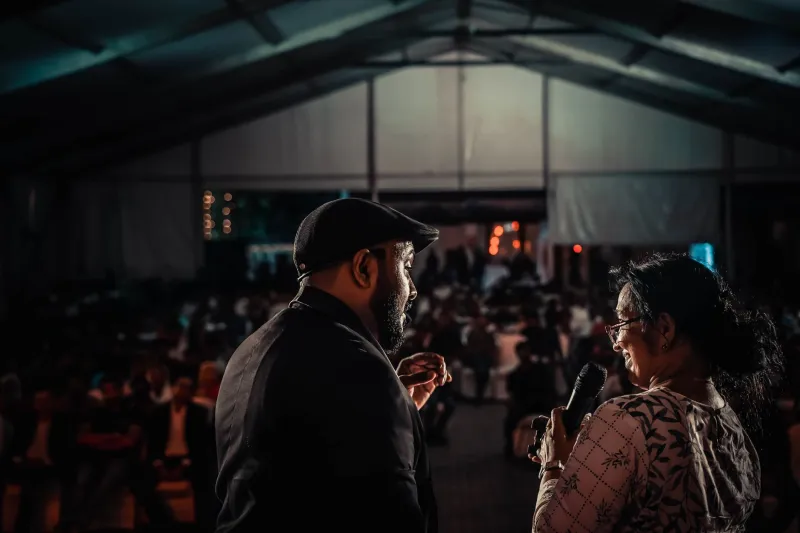
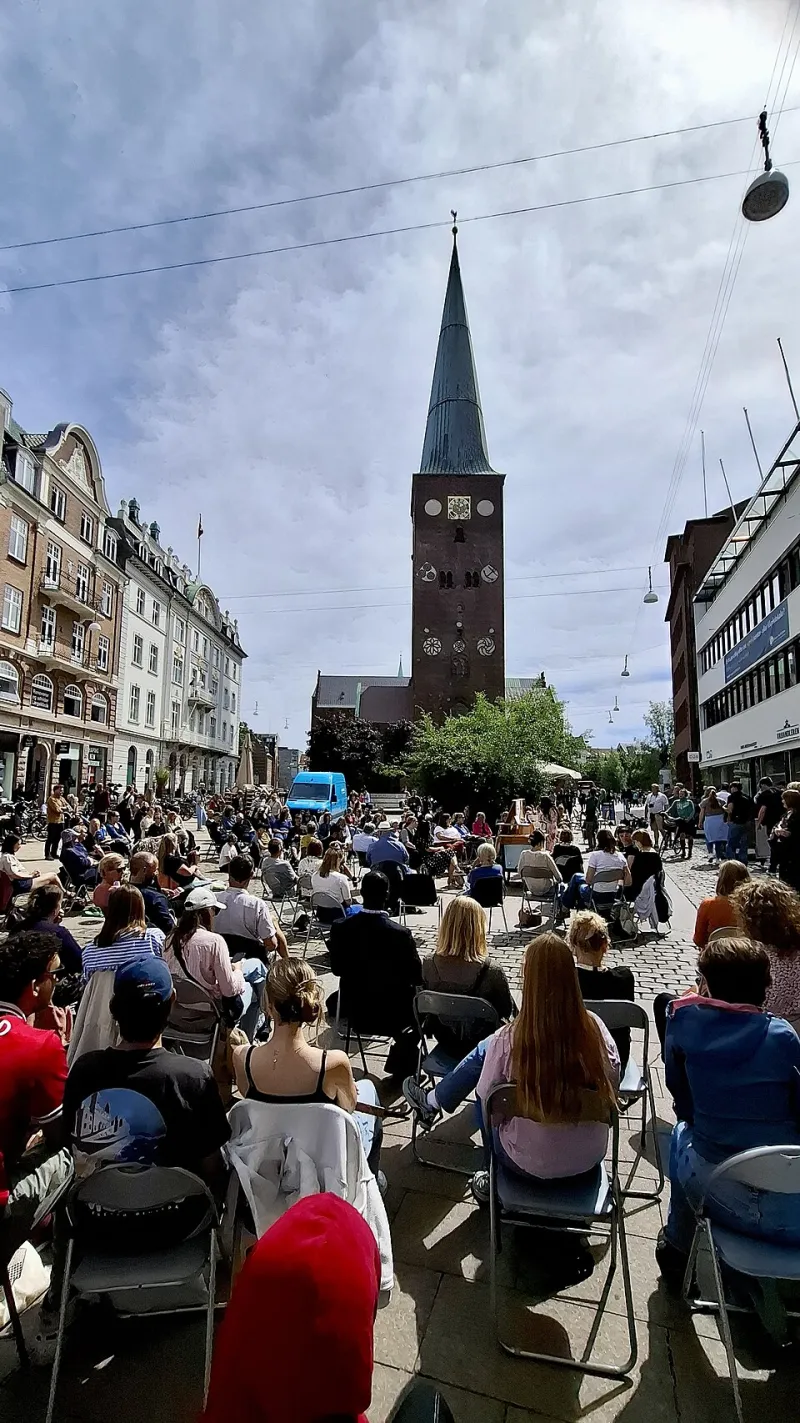
At a village hall somewhere in the Chilterns, the audience is still settling. Coats are being folded over chair backs, someone is apologising their way along a row, and the bookstall in the corner is doing a quiet trade in signed copies. Then the compere taps the microphone, says a few words, and the room changes gear.
That moment — the festival introduction — is easy to overlook. It is not the talk, not the Q&A, not the signing queue. It is the five minutes before all of that, and it is doing far more work than most people realise.
The five-minute job that isn't five minutes
A good introduction sounds spontaneous. It rarely is. On the Chilterns circuit, comperes and chairs are often booksellers, volunteers, local authors or festival staff who have fitted preparation around a day job. They read the book — or at least enough of it to ask a sensible question — and they chase the publicist for the details that never make it onto the back cover.
That means pronunciation checks. Preferred names and pronouns. Whether the author has a new book out or is here to talk about an older one. Whether they are happy to take questions from the floor, or would rather the chair kept things moving. One Berkhamsted compere admits to keeping a battered index card in her bag with the phrase 'ask about the shed' written on it, because the shed turns out to be the emotional heart of the novel and the author lights up whenever it comes up.
None of this is glamorous. All of it is the difference between an event that feels hosted and an event that feels merely announced.
Research without the Wikipedia dump
The temptation, when you have a microphone and a captive audience, is to prove you have done your homework. The result is the dreaded spoiler-filled biography: every prize longlisting, every previous title, every glowing review, delivered while the author stands beside you looking politely trapped.
Good comperes resist the urge to read the CV aloud. Instead, they choose one or two details that open a door. A childhood obsession with maps. A former career in flood defence. The fact that the book was written in the margins of a day job. It is not about withholding information; it is about editing it.
'You want the audience to lean in, not sit back,' says one Tring chair. 'If I list six prizes, they switch off. If I say the author once got locked in a library overnight, they are with us.'
That is not to say accuracy does not matter. It does. A wrong title, a mangled surname or a mispronounced place name can dent the atmosphere before the author has said a word. The best introductions are researched like a short article and delivered like a chat.
Spoiler alert: don't tell the whole book
There is a particular art to describing a book without giving it away. The compere has to make the audience want to read it, not feel as though they already have. That means setting up the premise, not the ending. It means mentioning the central tension, not the twist. It means remembering that some people in the room have not read a single page, and some have read everything the author has ever written.
On the Chilterns circuit, where events often sit somewhere between a bookshop reading and a village hall lecture, the introduction also sets the contract for the next hour. Will there be questions? Will the author read? Is there a signing afterwards? A good compere says all of this plainly, so the audience can relax into the event rather than trying to work out what happens next.
Late arrivals, wobbly mics and other live theatre
Festival introductions are live, which means they go wrong. A microphone dies halfway through a sentence. A late arrival clatters through the door during the first paragraph. A chair discovers that the author's new book is not the one they thought they were discussing.
The best comperes handle these moments without making them the story. They have a spare battery. They know how to hold the mic so it does not squeal. They welcome the latecomer with a nod rather than a glare. And if the details are wrong, they correct them lightly and move on.
That composure is not incidental. It tells the audience that someone is in charge, which in turn gives the author permission to be vulnerable, funny or serious. The introduction is not really about the compere. It is about creating a room in which the author can do their best work.
The quiet sales pitch
Here is the bit that rarely gets said out loud: a good introduction sells books. Not by hard-selling, but by making the author interesting enough that the audience wants to spend money on them afterwards. The compere who mentions the bookstall, the signing queue and the signed copies is not being pushy. They are joining the dots.
On a circuit where margins are tight and every sale matters, that matters. A warm, well-judged introduction can turn a curious attendee into a reader, and a reader into someone who comes back next year. It is one of the cheapest marketing tools a festival has, and one of the easiest to get wrong.
So next time you take your seat and the compere taps the microphone, listen closely. The five minutes that follow are not throat-clearing. They are the moment the whole event finds its feet.