The Early Queue and the Good Acoustic: Notes on the Chilterns Festival Regulars
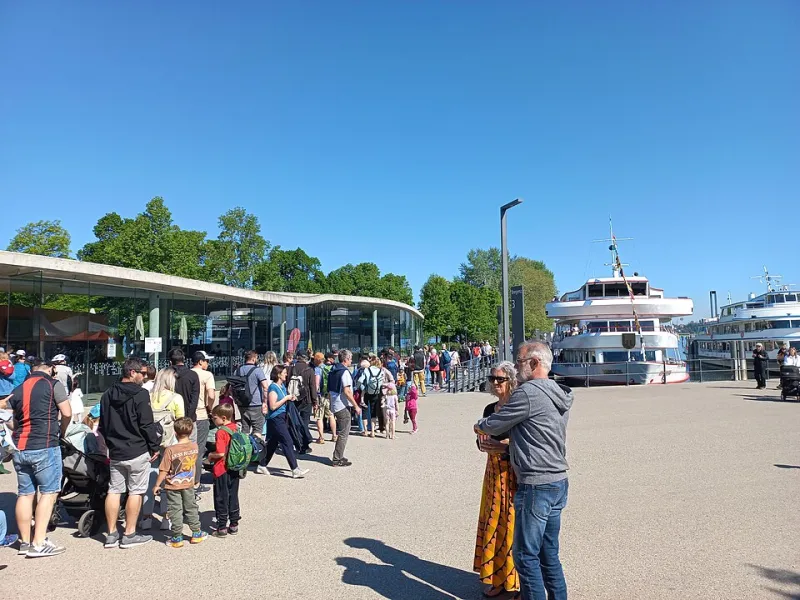
Photo: Asurnipal, CC BY-SA 4.0, via Wikimedia Commons
At 8:40 on a Saturday morning in Great Missenden, there is already a queue. Not for tickets — those went months ago — but for the folding chairs in the second room of the village hall. The first four people in line are not staff. They are regulars, and they have a system.
One carries a flask. Another has a canvas bag with a folded programme from the 2026 edition, already annotated in pencil. A third is explaining, with the patience of someone who has done this many times, that the queue will move faster if everyone lets the volunteers finish setting out the water jugs before asking questions. It is not unfriendly. It is simply the way things are done.
The Hour-Early Club
There is a particular kind of Chilterns festival-goer who treats an event start time as a suggestion for everyone else. They are not anxious. They are not even especially eager. They have just worked out that arriving early means a good seat, a calm cup of tea, and a chance to talk to the person next to them before the room fills up.
Margaret, a retired teacher from Chesham, has been coming to festivals across the Chilterns for more than a decade. She arrives fifty-five minutes before a morning session and heads straight for the back row. 'Not because I'm shy,' she says. 'Because I like to see the whole room. And the radiator is there.'
It sounds trivial. It is not. Regulars know which venues have a draught, which have a low stage, which have a pillar that eats one quarter of the sightlines. They know that the upstairs room at one town hall has better sound but worse legroom, and that the church hall has a beautiful acoustic but chairs that make everyone sound like they are shuffling through a hedge. First-timers learn this by mistake. Regulars learn it once and remember.
Acoustics, Sightlines and the Upstairs Room
Ask a regular about a festival and you will rarely get a review of the headliners. You will get a venue report. The room above the bookshop is warm but echoey. The arts centre has the best lighting but the worst coffee. The library is perfect until someone opens the door to the children's section.
This is not pedantry. It is the quiet expertise of people who have decided that a festival is not just a series of talks but a place to spend a weekend. They are less interested in whether a session is fashionable than whether they can hear it, see it, and get out afterwards without missing the next thing.
That last point matters. Regulars plan their days like a small military operation, but with more tea breaks. They know that the distance between the church and the town hall is eight minutes at a normal pace and four if you cut through the car park. They know that the bookstall queue is shortest during the first ten minutes of a keynote. They know that the best conversations happen on the pavement afterwards, not in the formal Q&A.
Pacing: The Two-Event Day
If there is one thing regulars understand better than anyone, it is that a festival is not a sprint. First-timers tend to book three events before lunch and then wonder why they feel like they have run a half-marathon in wet shoes.
The regulars do two. Maybe three, if one is a short reading and the other is nearby. They leave gaps. They sit in a café with a notebook. They walk to the next venue instead of driving. They buy a book they had not planned to buy and then read the first page on a bench.
'You have to leave room for the day to happen to you,' says Tom, a regular from Tring who has been attending Chilterns festivals since before the current circuit took shape. 'If you book every hour, you're just moving between rooms. You're not actually at the festival.'
That is the sort of thing that sounds obvious until you try it. Loyalty to a festival is not about seeing everything. It is about returning often enough to know what to skip. The regulars have learned that the best weekend is not the fullest one. It is the one where you still have the energy to stay for the impromptu chat in the foyer.
Rituals and the Circuit as Community
There are small rituals that repeat across the Chilterns. The same faces appear in the queue for the first event of the day. The same people hover by the second-hand book table. The same volunteer recognises a regular and says, 'You're back again.' There is a particular nod that passes between people who have sat through a difficult Q&A together and survived.
Festivals cultivate this loyalty in quiet ways. Priority booking helps. So does a programme that trusts its audience to try something unfamiliar. But the regulars I spoke to were less impressed by schemes and more impressed by consistency. A festival that remembers your name, or at least your face, is a festival you return to. A festival that makes the same small mistakes every year is one you learn to work around.
Names have been changed, at their request, because regulars are modest to a fault. They do not think of themselves as experts. They think of themselves as people who like books and have worked out where to stand. But that is exactly what makes them worth listening to.
What First-Timers Can Borrow
If you are new to the Chilterns circuit in 2026, the regulars have a few pieces of advice. Arrive early, but not so early that you make the volunteers nervous. Pick one venue and settle into it rather than trying to cover the whole town. Buy the book before the event, not after. Bring a layer. Keep Sunday afternoon free. And talk to the person in the queue, because they have probably been coming for years and they know which upstairs room has the best acoustics.
The front row is not the point. The point is the return. A festival becomes a community not because everyone knows each other, but because everyone keeps showing up, year after year, and slowly learns the same small things: where the good seat is, when to take a break, and why it is worth coming back.