Holding the Hour: Field Notes from the Festival Chair's Table

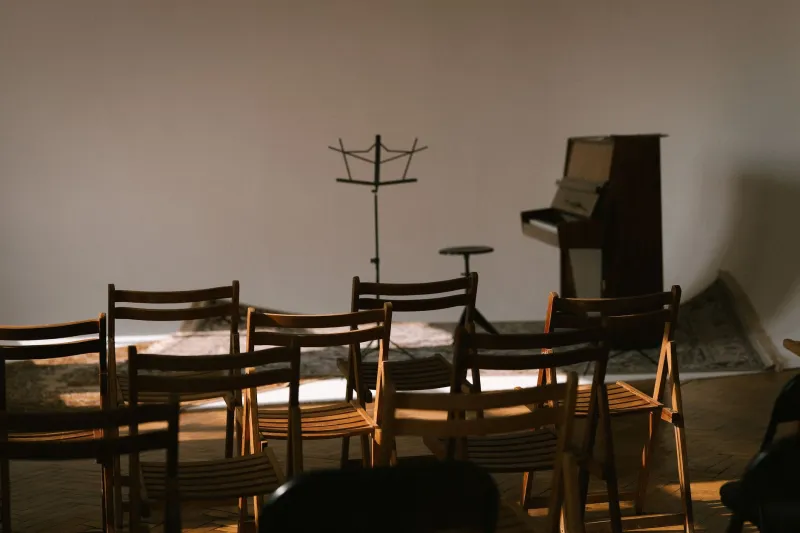
Photo by Photo by Zac Bowling on Unsplash on Unsplash
There is a particular sound a festival panel makes when it is going wrong. It is not silence, exactly. It is the low rustle of a hundred people checking their watches at the same time. Up on stage, four authors are politely circling the same anecdote, one of them has not spoken since the introduction, and the chair is nodding with the fixed smile of a person who has just realised the hour is somehow both half over and nowhere near finished.
Good chairing is invisible. Bad chairing is the only thing anyone remembers. And yet, on the Chilterns festival circuit, the chair is often the least discussed person on the billing: not the headliner, not the debut novelist with the striking cover, not even the event steward with the clipboard. They are the person holding the hour together, and most of the time they would prefer you did not notice.
Before the Room Fills
Ask experienced chairs what the job involves and they will not start with the stage. They start with the reading. A chair who has not read the books is not chairing a conversation; they are hosting a raffle. One Chilterns host with a decade of panels behind her describes her preparation as a kind of gentle detective work: read the books, mark the passages that made her laugh or argue with the page, then build a ladder of questions rather than a script.
“You need enough structure to feel safe and enough space to abandon it,” she says. “If I arrive with twenty questions and use six, that is a good day. If I arrive with six and need twenty, I am sunk.”
There is also the pre-event huddle. Good chairs speak to their panellists beforehand, however briefly. Not to coach them into blandness, but to ask what they are tired of being asked, what they are promoting, whether they would rather be drawn out early or late, and whether anyone is likely to need a nudge towards the microphone. It is the festival equivalent of checking the seating plan before a wedding: dull, sensible, and quietly decisive.
The Four-Author Problem
A two-person event is a conversation. A four-person event is a small engineering project. Each author arrives with a different rhythm, a different reason for being there and, quite often, a different understanding of how long an answer should be.
The chair’s job is not to give everyone exactly equal airtime, which is impossible and faintly patronising anyway. It is to make sure nobody disappears. The quiet author who has written the most interesting book of the lot should not be left staring at the table while the others trade jokes. The chair needs a few reliable bridges: “That connects to something you said earlier, doesn’t it?” or “I want to bring you in here, because your book takes a different view.” These are not tricks. They are manners, with a stopwatch attached.
Timekeeping is where the romance of the literary panel meets the reality of the village hall clock. A good chair does not wave a phone around like a referee brandishing a red card. They use small signals: a pen laid down, a shift in posture, a phrase like “I want to make sure we leave room for questions.” One chair admits to using a discreet kitchen timer in the green room and then pretending, on stage, to be entirely above such things. “I am not above such things,” she says. “I am simply not doing it visibly.”
When One Voice Eats the Hour
Every chair has a story about the dominant panellist. The one who answers every question, including the questions addressed to other people. The one who treats the microphone as a personal karaoke machine. The one whose anecdotes have anecdotes.
Handling that without turning the event into a public scolding is the real test. Experienced chairs tend to use the same tactics: ask narrower questions, physically turn towards the quieter panellists, and deploy the phrase “Let’s hear from someone else on this” with the calm finality of a headteacher who has already decided not to raise their voice.
It also helps to remember that the audience is not there to witness a duel. They have paid for an hour of interesting company, not a gladiator contest. The best chairs intervene early, before the room starts to sag, and do it with enough warmth that the dominant speaker thinks they are being encouraged rather than managed. They are being managed. But kindly.
The Art of the Unexceptional Question
A chair does not need to be the cleverest person in the room. In fact, it is often better if they are not. The job is to ask the question that unlocks the author, not the question that shows off the chair. One of the most useful questions in the business is also one of the plainest: “What did you cut, and why?” Another is: “Who did you write this for?” They sound simple. They rarely are.
There is a temptation, especially for first-time chairs, to over-prepare a grand narrative about the panel. But literary conversations have a way of refusing to follow the itinerary. A good chair leaves room for the accidental moment: the author who says something they have not said before, the unexpected connection between two books, the laugh that releases the room. You cannot schedule that. You can only stop talking long enough for it to happen.
What First-Timers Should Know
If you are chairing your first festival panel this year, here is the short version. Read the books. Arrive early. Learn how to say the panellists’ names. Check the microphones. Have more questions than you need. Keep an eye on the quiet one and a gentle hand on the loud one. Do not read your introduction from a phone if you can avoid it, and do not use the phrase “we could talk about this all day” unless you genuinely intend to. Above all, remember that the audience has come to hear the authors. The chair is the handrail, not the view.
And if it goes well, nobody will mention you afterwards. That is not a slight. It is the whole point. The best chair is the one who makes the hour feel effortless, who turns a loose collection of authors into a conversation, and who sends everyone home feeling they have been in good company. The Chilterns circuit has plenty of these quiet professionals. You have probably been in the room with one and never noticed. Which, if you think about it, is exactly what they were hoping for.