Cloudbursts and Clipboards: How Chilterns Book Festivals Plan for a Bad Sky
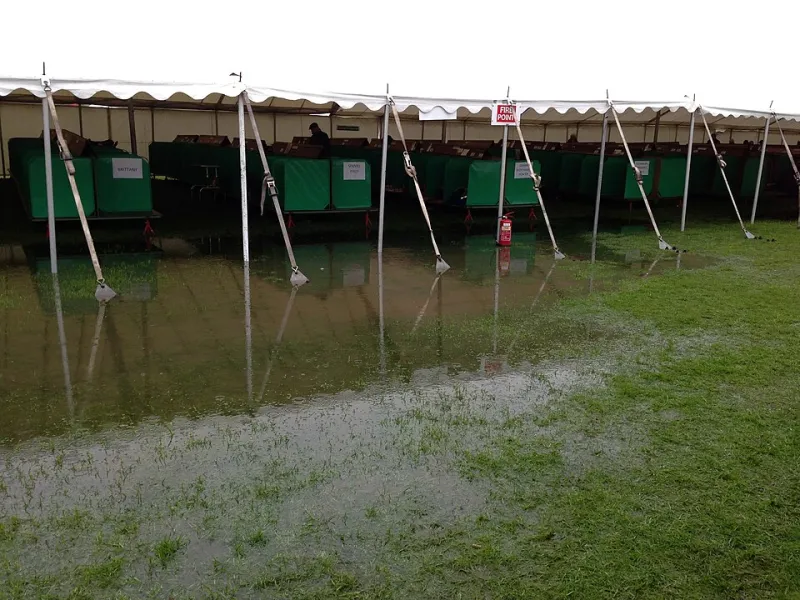
Photo: Sagaciousphil, CC BY-SA 3.0, via Wikimedia Commons
There is a particular look that crosses a festival organiser’s face when someone says, brightly, “at least it’s not raining.” It is not relief. It is the look of a person mentally counting guy ropes, checking the marquee schedule and wondering whether the village hall has a spare key. In the Chilterns, weather is not small talk. It is a production issue.
For the 2026 season, I have been asking people who put on literary festivals across the region how they actually plan for the great British sky. Not the glossy version where the sun always shines on the signing queue, but the real one: the one with ballast weights, wet book jackets, late trains and the outdoor stage microphone that starts to hum the moment a cloud appears.
The forecast is a starting gun, not a guarantee
“We don’t plan for rain,” says Hannah, who helps run a book festival in the central Chilterns. “We plan for three rains. One before doors, one during the headline event and one just as everyone is leaving.”
That sounds like a joke until you see the paperwork. Most festivals now run a weather call in the week before the event, then again on the morning. They are not just looking at the BBC app. They are checking wind speeds, because a gust is often more trouble than a shower, and they are checking the ground, because a dry field can turn into a mud bath in twenty minutes once a few hundred pairs of boots have crossed it.
The upshot for readers is simple: the festival has probably thought about the weather more than you have. Your job is not to outsmart the forecast. It is to turn up prepared for it to be wrong.
Ballast, guy ropes and the bookstall that must not float
A bookstall is a lovely thing until it is standing in an inch of water. Booksellers on the circuit are quietly ruthless about this. Stock goes into plastic crates, not cardboard boxes. Tables are raised on pallets or adjustable legs. Gazebo weights are not decorative. And there is usually a laminated plan somewhere marked “wet route” that tells volunteers which stock gets moved first.
One bookseller in Tring told me she keeps a roll of cling film in her van for the specific purpose of wrapping signed copies that are waiting to be collected. “It looks absurd,” she said. “But nobody wants to explain to a customer why their signed first edition has a tide mark.”
Marquees get the same treatment. Organisers will talk about ballast, pegging and side panels with the seriousness of people rigging a small ship. If the wind is forecast to pick up, an outdoor session may move indoors at short notice. That is not a failure of planning. It is the planning working.
The author on the M40 problem
Weather does not just affect the site. It affects the people travelling to it. A closed lane on the M40, a cancelled train on the Chiltern line or a taxi that cannot get down a flooded lane can all put a session at risk.
Good festivals build in buffers. They keep authors in touch with a named contact. They have a plan for a late start, a shorter conversation or a host who can fill ten minutes without visibly panicking. One organiser in Amersham told me they always ask authors for a mobile number and a backup way of joining the event, just in case the last stretch of the journey becomes impossible.
For audiences, the advice is to be patient. A delayed author is usually more frustrated than you are. And if a session starts late because someone has been stuck on the A41, it is not a reflection on the festival’s professionalism. It is a reflection on the A41.
The microphone hates fresh air
The outdoor stage is where weather planning gets properly technical. A microphone that sounds fine in a rehearsal room can pick up wind, rain and the low rumble of a generator once it is outside. Pop shields become wind shields. Cables get taped down with extra care. The sound desk needs a cover that is not a bin bag, although a bin bag has been known to appear.
“If the sky spits, we move to the wired backup and get the desk under cover,” one sound engineer told me. “The show can survive a bit of rain. It cannot survive a desk full of it.”
This is why some outdoor sessions have a slightly cautious feel. The host may stand closer to the mic. The author may be asked to repeat a question. There may be a pause while someone adjusts a cable. That is not amateurish. That is a small outdoor event trying to keep the sound working while the weather does its best to interfere.
What to pack for a Chilterns festival in 2026
A practical list, written in the spirit of a festival organiser rather than a fashion shoot:
- A proper waterproof jacket with a hood. Not a shower-resistant jacket. A mac.
- Waterproof shoes or boots you have already broken in. Leave the suede at home.
- A tote bag with a dry bag inside for books, signed copies and your phone.
- Layers. A marquee can be warm at noon and cold by four o’clock.
- A small towel. You will feel foolish until you need it.
- A flask. Festival tea queues are long enough in good weather.
- A portable battery for your phone, especially if you are relying on tickets or schedules.
- A printed copy of the schedule. Paper does not need a signal.
What to leave behind? A giant umbrella, unless you enjoy trying to open it in a crowded marquee. White trousers. The belief that the forecast will hold.
When the heavens open mid-session
This is the moment readers ask about most. The honest answer is that it depends on the festival, the venue and the session. But there are a few things that hold true.
Listen to the steward. If they ask you to move, move. If a session is paused, it is usually because the sound or the safety of the tent has become questionable. Do not crowd the exits. Do not ask the author for a selfie while they are being escorted across a wet field. And do not panic about your ticket — most festivals will either reschedule, refund or transfer, and the person at the desk is not personally responsible for the cloudburst.
The best festivals rehearse the wet plan. They know which sessions can move into the church, which can shift to the village hall and which need to be cut short. It is not glamorous work, but it is the difference between a memorable day and a miserable one.
A wet festival is still a festival
There is an upside, and it is not just the excuse to buy another tea. Rain changes the rhythm of a festival. People linger in bookshops. Rooms feel more intimate. The signing queue becomes a small, cheerful huddle rather than a production line. And there is something quietly satisfying about listening to an author talk about landscape or memory while the rain drums on a marquee roof.
So bring a mac, not a mood. Bring patience. Bring a dry bag. The Chilterns in 2026 will still turn on the sun for long enough to make you forget the forecast. Just do not bet your signed first edition on it.